A New Milestone for Robotic Endometriosis Surgery in San Diego
What San Diego County's first outpatient robotic-assisted surgery means for patients
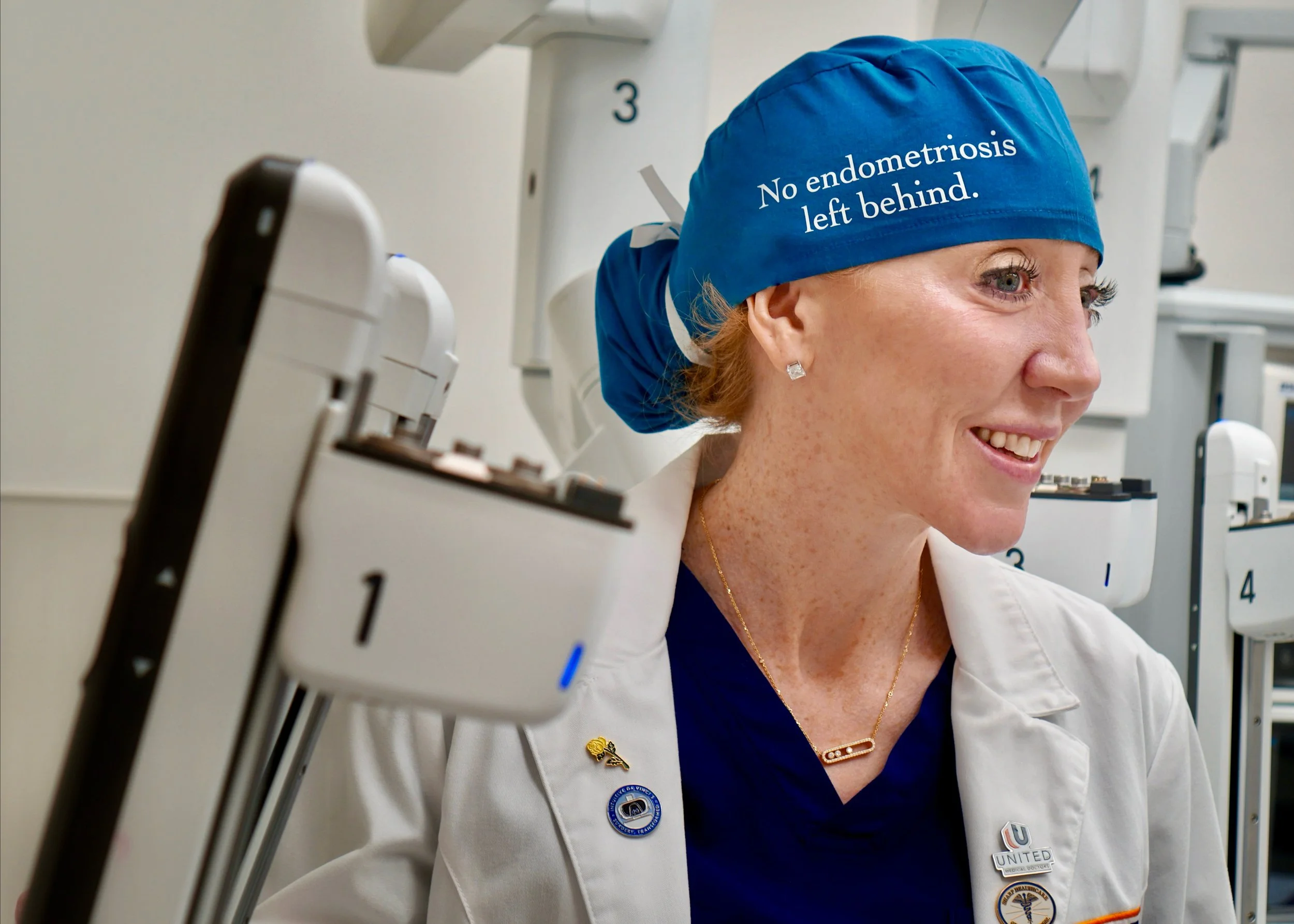
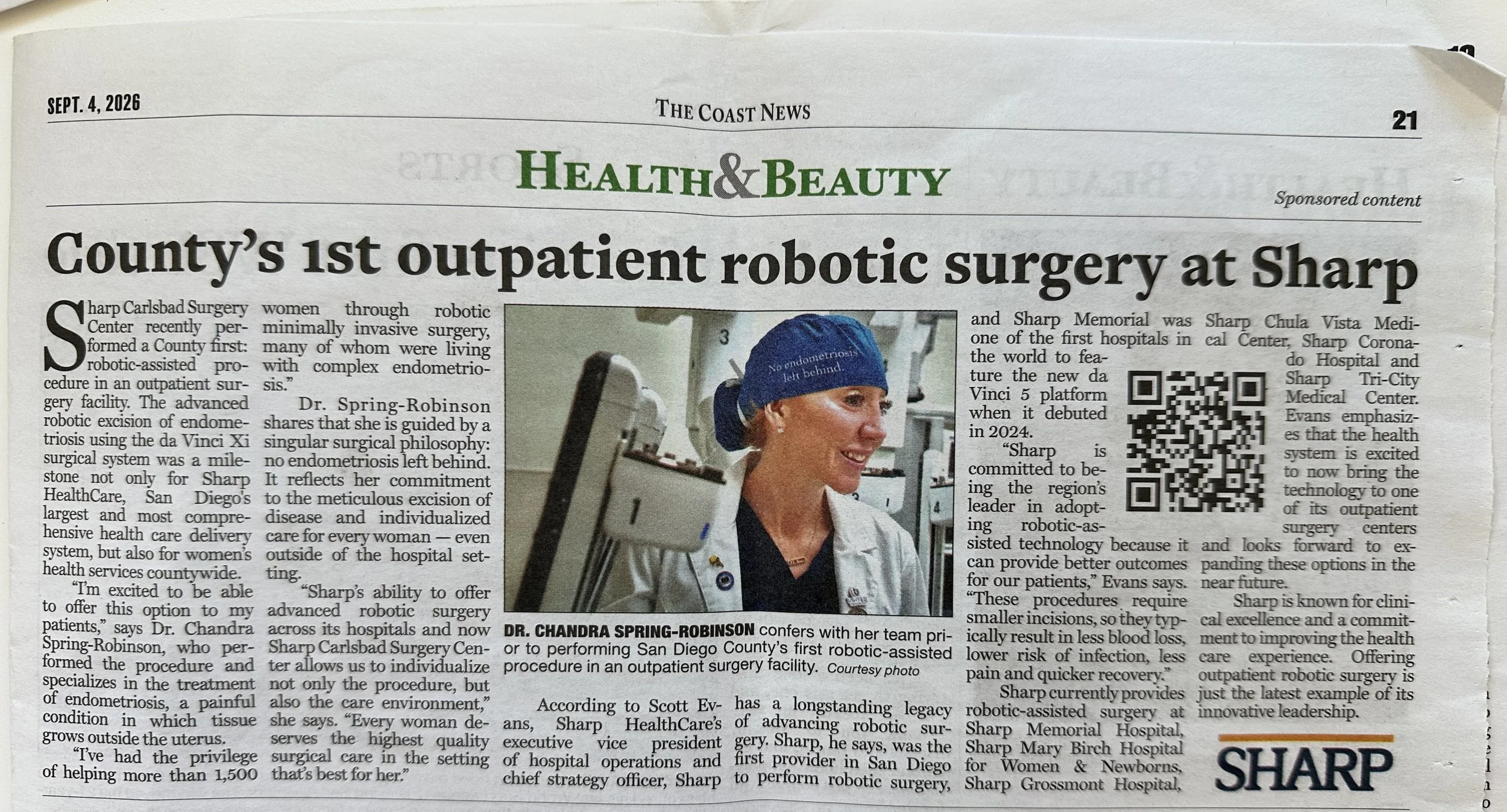
Recently, I had the privilege of performing the first robotic-assisted surgery at Sharp Carlsbad Surgery Center and, according to Sharp, the first robotic-assisted procedure performed in an outpatient surgery facility in San Diego County. The procedure was an excision of endometriosis using the da Vinci Xi robotic surgical system, and the milestone was recently featured in The Coast News. I'm proud to have been the surgeon for this first.
But what excites me most isn't simply being able to say that we did something "first."
It's what this represents for where minimally invasive endometriosis surgery may be headed.
Bringing Advanced Surgery Into the Outpatient Setting
For years, increasingly sophisticated procedures have moved from traditional inpatient hospitalization toward outpatient care when it can be done safely and appropriately.
Minimally invasive gynecologic surgery has helped make that possible. Compared with open abdominal surgery, minimally invasive approaches are associated with benefits including shorter hospital stays and faster return to normal activities. ACOG
And there is growing experience with advanced gynecologic surgery in ambulatory settings. In one multicenter study that included patients undergoing advanced laparoscopic procedures for endometriosis, fibroids and hysterectomy, 97.7% were discharged within 24 hours, although a small number required hospital transfer or subsequent admission. The authors emphasized appropriate resources and an experienced surgeon as important elements of an ambulatory program. PubMed
That's an important qualifier.
Outpatient surgery isn't about sending everyone home faster. It's about creating another appropriate surgical setting for the right patient and the right procedure.
Why an Outpatient Surgical Setting Can Matter
An ambulatory surgery center is specifically organized around patients coming in for a procedure, recovering under observation, and going home rather than being admitted to the hospital. For appropriately selected patients, that can mean a more streamlined surgical experience and the opportunity to recover at home rather than routinely spending the night in a hospital.
Research in robotic gynecologic surgery has also demonstrated that same-day or short-stay discharge can be feasible for selected patients. Studies of robotic hysterectomy have reported no significant increase in readmission among appropriately selected patients discharged earlier, while also identifying factors that may make overnight observation more appropriate. PubMed
And that's exactly the point: the setting should fit the patient, not the other way around.
Some patients and procedures belong in a hospital. Others may be appropriate for an outpatient surgical center. Having both options allows us to think more intentionally about where surgery should take place.
Where Does Robotic Surgery Fit?
Robotic surgery is my preferred surgical platform for complex endometriosis.
Endometriosis can involve anatomy far beyond an isolated lesion on a reproductive organ. Disease may be found around the ovaries, pelvic sidewalls, ureters, bowel, bladder and other structures. Prior inflammation and surgery can also contribute to fibrosis, adhesions and distorted anatomy.
The robotic platform provides magnified visualization, wristed instrumentation and a high degree of dexterity when working within these complex spaces. ACOG similarly identifies visualization and dexterity among the reported advantages of robotic technology. ACOG
But the robot doesn't perform the operation. It is a surgical tool.
The technology matters, but so do the surgeon's experience, knowledge of endometriosis, surgical judgment and ability to recognize and appropriately address disease.
That's why I don't believe the question patients should ask is simply:
"Do you use a robot?"
A better question is:
"How will you use the tools available to treat my disease?"
Not Every Endometriosis Surgery Belongs in an Outpatient Center
This is particularly important. Endometriosis doesn't look the same in every person, and neither should the surgical plan. Some cases may be appropriate for an ambulatory surgery center. Other patients may need a hospital setting because of their medical history, anticipated surgical complexity, the organs potentially involved, the need for additional surgical specialists, or the possibility that postoperative hospital care could be necessary.
Patient selection matters. Surgical planning matters. And having access to an outpatient robotic platform doesn't eliminate the need for hospital-based surgery. It gives us another option.
More Options for Endometriosis Care in San Diego
After surgically caring for more than 1,500 women with endometriosis using robotic minimally invasive surgery, one thing has become increasingly clear to me:
There isn't one endometriosis patient, one endometriosis surgery, or one recovery.
Expanding robotic surgery into the outpatient setting gives us another environment in which appropriately selected patients may receive minimally invasive surgical care.
For me, that's the significance of this milestone. It isn't about moving every surgery out of the hospital. It isn't about technology for technology's sake.
It's about having more tools, more settings, and more options to build the surgical plan around the individual patient.