From the Operating Room to the Laboratory: Asking Better Questions About Endometriosis
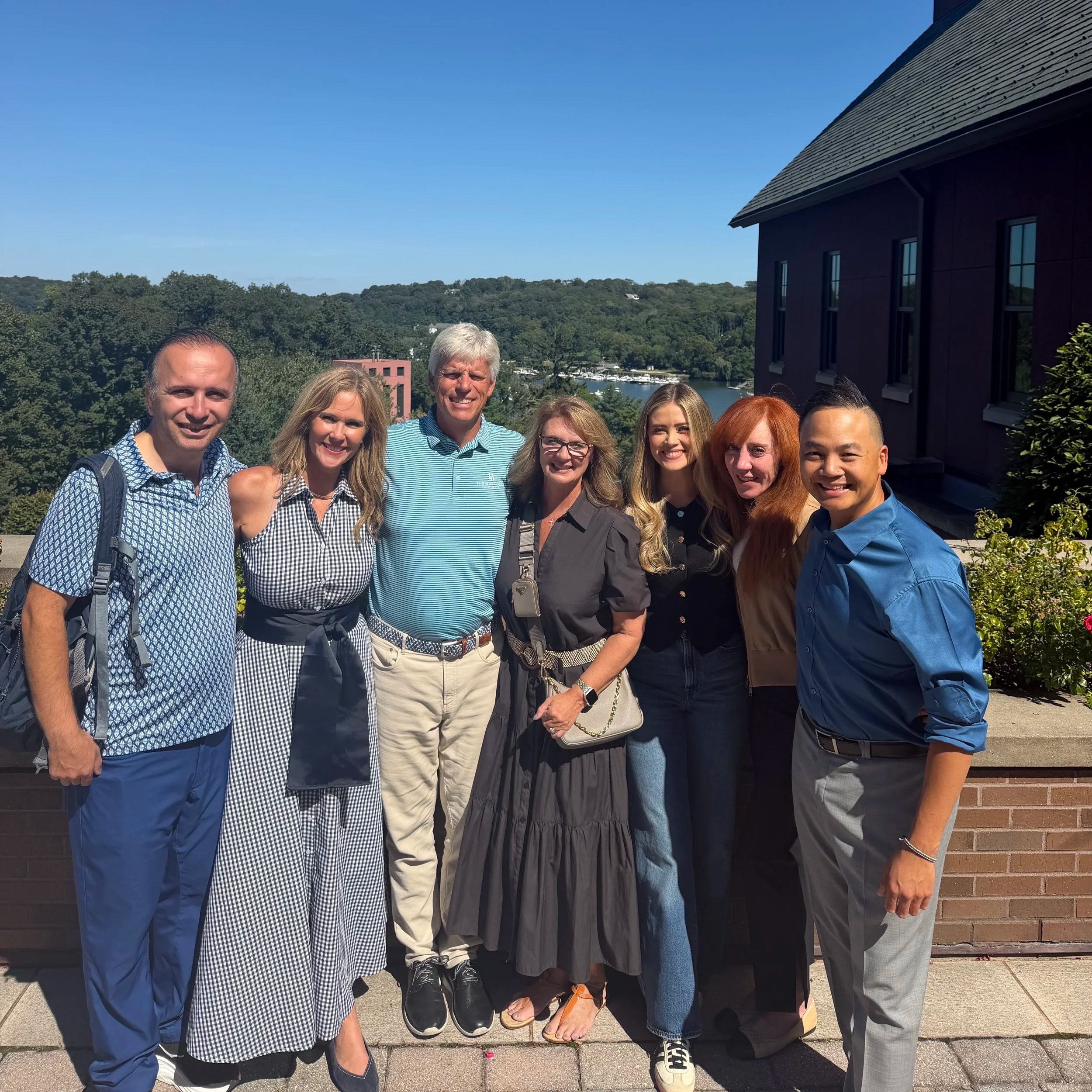
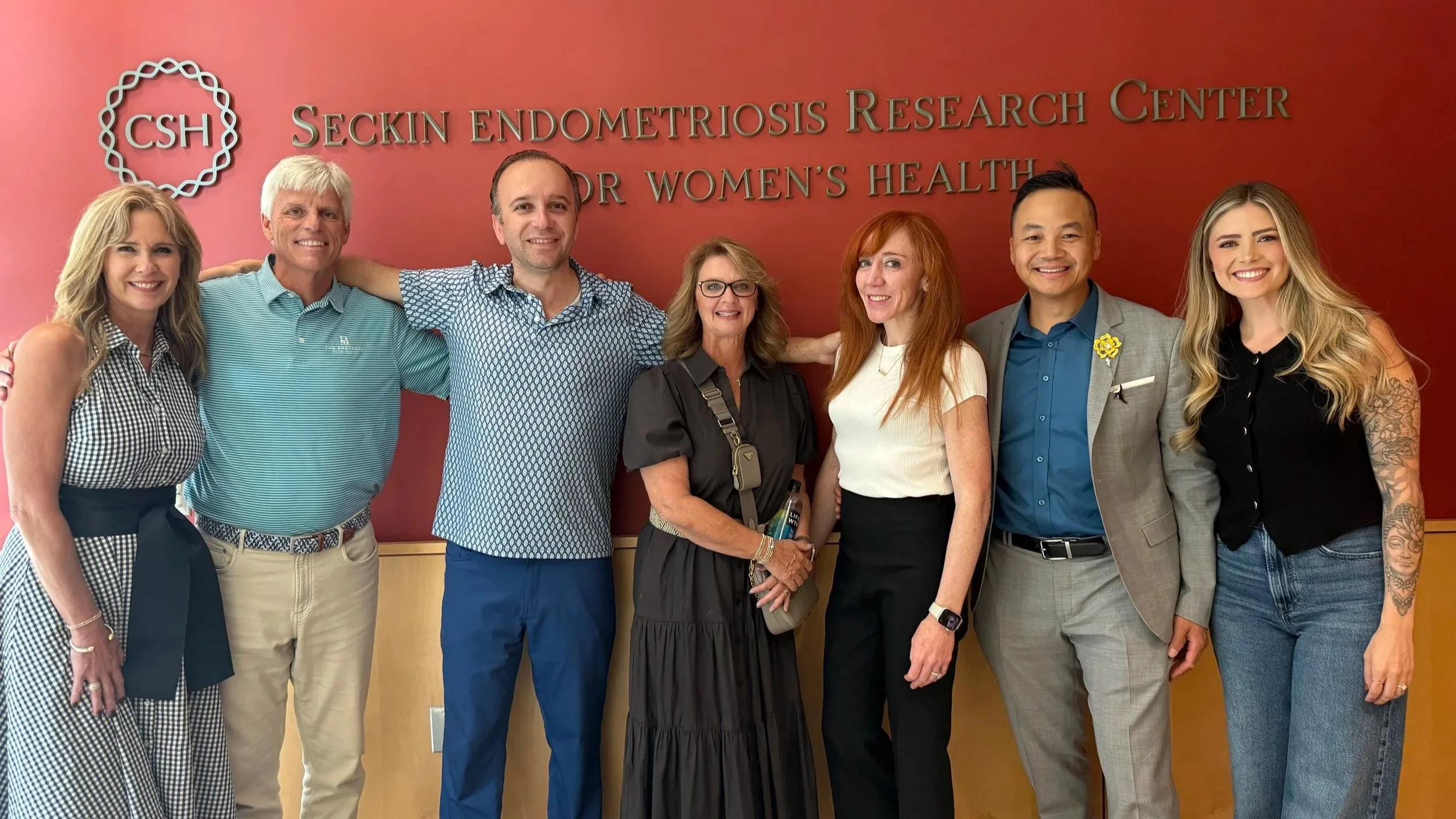
Our New York trip began somewhere I had been particularly excited to visit: Cold Spring Harbor Laboratory. Along with Savannah Regensburger, Kara O’Malley of Our Daughters Foundation, my husband Jeff, and members of the Cold Spring Harbor research team, I spent the morning with Semir Beyaz, PhD discussing endometriosis from a perspective very different from the one I usually have in the operating room.
As an endometriosis excision surgeon, I see the physical manifestations of this disease every week. I see lesions. Fibrosis. Adhesions. Endometriomas. Distorted anatomy. Bowel involvement. Bladder involvement. Disease that looks dramatically different from one patient to another.
But the operating room can show us what happened. The laboratory may help us understand why. And that distinction was at the center of our conversation.
Why does endometriosis behave so differently?
One of the most frustrating aspects of endometriosis is its heterogeneity. There is no single presentation.
I can see a teenager with remarkably extensive disease and large bilateral ovarian endometriomas. Another woman may reach her 40s after decades of symptoms with a very different disease burden. Some patients experience severe pelvic pain. Others experience gastrointestinal symptoms that have been attributed to IBS. Some primarily struggle with fertility. And a portion of the women I see have what we often call “silent” endometriosis, where significant disease may exist without the classic pain symptoms we associate with it.
Why?
Why does disease develop aggressively in one woman but behave differently in another?
Why do symptoms correlate poorly with what we eventually find surgically?
Why do some patients respond well to a particular postoperative medical strategy while seemingly similar patients do not?
These are observations clinicians make. But observations should be the beginning of scientific questions, not the end of them.
Looking beyond endometriosis as simply a gynecologic disease
One of the most interesting parts of our discussion was how much we still need to understand about endometriosis beyond the reproductive system.
Semir’s research background spans stem-cell biology, immunology, metabolism, cancer biology, gastrointestinal disease and the microbiome. Those seemingly different areas become particularly interesting when we begin thinking about endometriosis as a complex inflammatory disease. We discussed the interaction among several potential pieces of that puzzle: immune surveillance, chronic inflammation, fibrosis, metabolism, genetics and epigenetics, the microbiome, and the underlying biology of endometrial cells.
The important point is not that we currently know exactly how all of these pieces fit together.
We don’t.
It is that we now have increasingly sophisticated tools to begin asking those questions.
Growing human tissue to understand disease
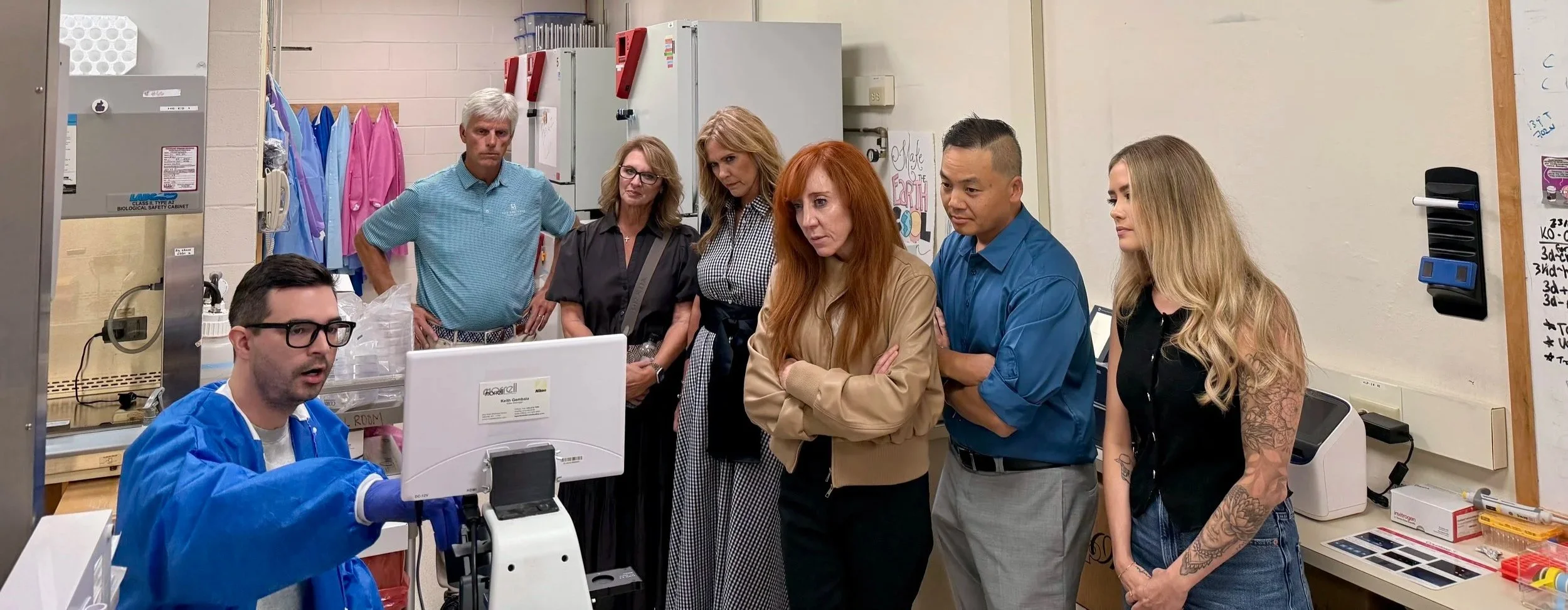
One of the highlights of our visit was seeing patient-derived organoids in the laboratory. Organoids are three-dimensional cellular models grown from human tissue. Instead of looking only at cells growing flat on a dish, researchers can create structures that preserve more of the biological characteristics of the tissue they are trying to understand. We were able to see normal endometrial organoids and compare their organized architecture with organoids derived from endometrial cancer.
The difference was striking. The broader scientific opportunity is even more interesting.
If researchers can create high-fidelity models that retain important molecular characteristics of a patient’s tissue, those models may provide a way to investigate disease mechanisms and test hypotheses about potential therapies before moving into larger human studies. Semir and his team have used this type of translational approach in other areas of disease research. Now they are applying many of those tools and principles to endometrial biology and endometriosis.
For someone who spends so much of her life physically removing endometriosis, seeing the disease approached at the cellular and molecular level was fascinating.
The biomarker problem
Another major part of our conversation involved one of the biggest challenges facing endometriosis research:
How do we objectively measure the disease?
Pain is important, but pain is complex and isn’t synonymous with disease burden. Imaging continues to improve, but imaging has limitations and is dependent on modality, disease presentation and expertise. Inflammatory biomarkers may identify inflammation without necessarily telling us whether that inflammation is specifically being caused by endometriosis.
That creates an enormous challenge not only for diagnosis, but also for research. If we are testing a new therapy, how do we objectively determine whether it is changing the underlying disease? Better biomarkers, improved imaging, molecular profiling and potentially combinations of these technologies could fundamentally change both research and clinical care. But those tools need rigorous validation in real patient populations.
From clinical observation to a research question
We also spent time discussing an area that our team has become increasingly interested in: metabolism, inflammation and GLP-1-based medications.
I want to be very clear about this.
GLP-1 medications are not currently established treatments for endometriosis.
What we have are clinical observations and scientific questions. In my own practice, I have observed changes in symptoms among some patients taking these medications. That raises interesting questions about whether metabolic and inflammatory pathways could be relevant to endometriosis biology. But observing something in a clinic does not prove causation.
That distinction is incredibly important.
The appropriate next step is not to declare that we have discovered another treatment for endometriosis. The appropriate next step is to ask:
Why might we be seeing this?
Is there a metabolic mechanism?
An immune mechanism?
An inflammatory mechanism?
Could certain biological subtypes of endometriosis respond differently than others?
Could these observations eventually help us better understand which patients might benefit from which interventions?
Those are research questions.
And those are precisely the kinds of questions we want to investigate.
There may never be one endometriosis treatment
One of my favorite parts of our discussion was also one of the most challenging. We kept returning to the possibility that there may never be one “magic bullet” for endometriosis. Perhaps different biological processes need to be addressed differently. Perhaps inflammation matters more for one patient. Fibrosis for another. Hormonal signaling, immune dysfunction, metabolism or other pathways may play different roles in different forms of disease. And perhaps what we currently call endometriosis will eventually be divided into biologically meaningful subtypes.
That could help explain something clinicians already see every day:
Two patients who appear remarkably similar can respond completely differently to the same treatment.
The future may therefore be less about finding the treatment for endometriosis and more about determining which treatment, or combination of treatments, is appropriate for which patient. That is a much more difficult scientific problem. It is also a much more exciting one.
Connecting the patient, surgeon and scientist
Science like this cannot happen in isolation. During our conversation, Semir described an ecosystem connecting patients, surgeons, scientists, epidemiologists, advocates, biotechnology companies and pharmaceutical researchers.
I would add another important participant to that ecosystem:
the listener.
My husband, Jeff, joined us at Cold Spring Harbor. Jeff isn’t a physician or laboratory scientist. In many ways, that’s precisely why I value the questions he asks. For years, he has listened to me come home from the operating room and talk about what I was seeing. As we have built EndoEdu together, he has increasingly spent time listening directly to Endo Warriors and learning about their experiences navigating this disease.
The path to diagnosis.
The surgeries.
The physicians who helped them.
The encounters that didn’t.
The effect on relationships, careers, fertility, families and identity.
And the questions they wish someone had asked much earlier.
As clinicians and scientists, we inevitably approach endometriosis through our professional lenses. Someone outside those disciplines can sometimes ask a deceptively simple question that forces us to explain why we believe something or why the patient’s lived experience doesn’t seem to match what conventional medicine tells us should be happening.
That kind of listening matters. And it is becoming an increasingly important part of what we want to build through EndoEdu.
Building a different kind of endometriosis conversation
EndoEdu was never intended to be another place where doctors simply lecture patients.
Education is important. But so is conversation.
We want to create an environment where an Endo Warrior can learn from a surgeon, where a surgeon can learn from a scientist, where a scientist can hear directly from patients, and where advocates and families can help us identify questions the traditional medical system may have overlooked. That is also why visits like Cold Spring Harbor matter.
A surgeon may notice a pattern among hundreds of patients.
A patient may describe something medicine hasn’t adequately measured.
A scientist may have a model capable of investigating it.
An advocate may help bring the people and resources together.
And someone listening to all of them may recognize a connection that deserves another question.
That is how an observation begins the journey toward evidence.
We left with more questions
I did not leave Cold Spring Harbor believing we had solved endometriosis. Quite the opposite. I left more aware of how much we still don’t know. But I also left encouraged by what is becoming possible.
What if observations from the clinic can become hypotheses tested in the laboratory?
What if tissue removed during surgery can help scientists understand why disease behaves differently among women?
What if molecular profiling eventually allows us to stop treating endometriosis as though every patient’s disease is biologically identical?
What if better biomarkers allow us to objectively measure disease and response to treatment?
And what might we discover if, throughout that entire process, we become much better at listening to the women actually living with it?
These are big questions. Answering them will require rigorous science, thoughtful clinical research, funding, collaboration and time. But for the millions of women still waiting for better answers, they are questions worth pursuing.
We need to keep asking. And we need to keep listening.