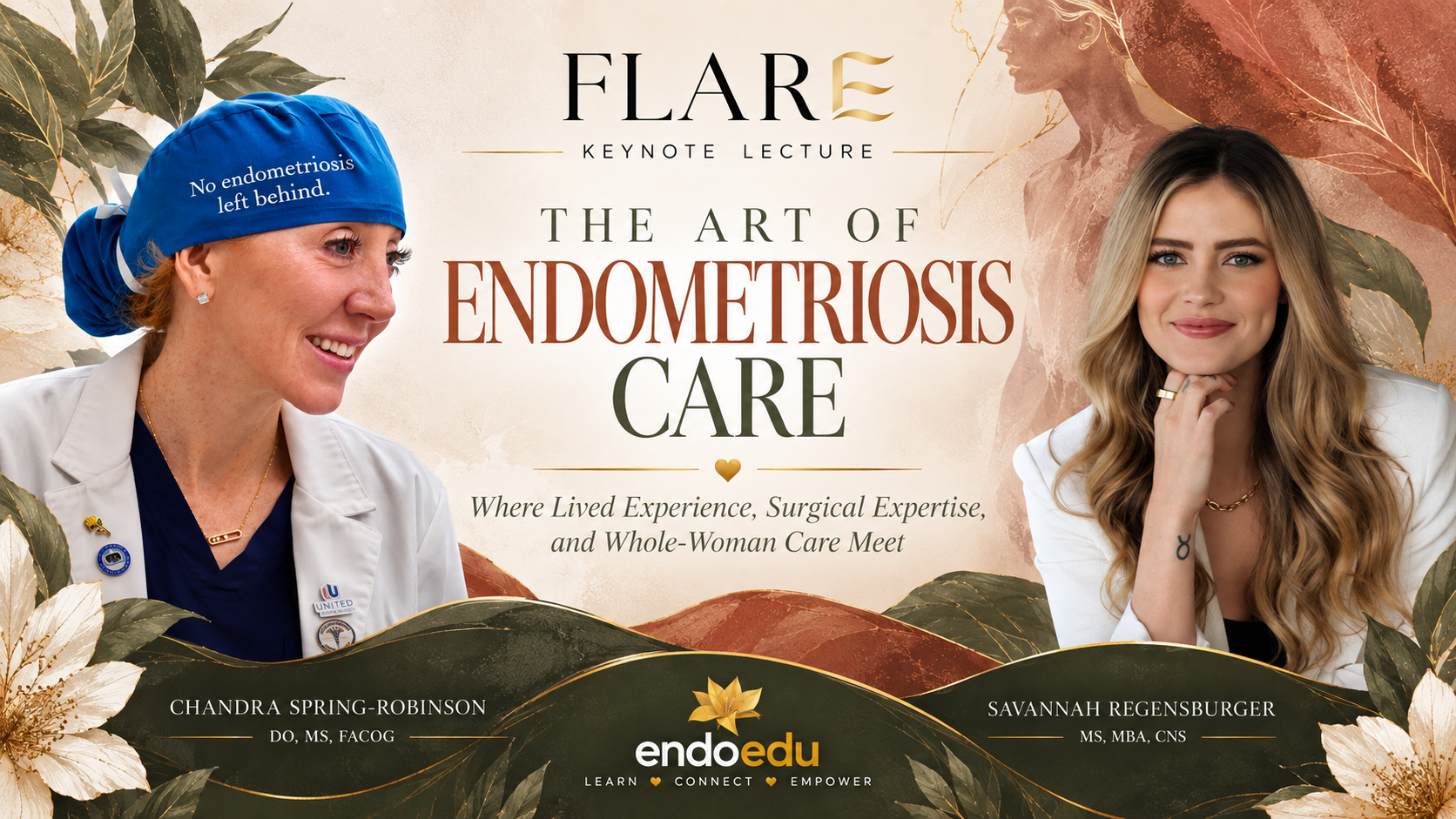
The Art of Endometriosis Care: What New York Taught Me About Science, Community and Listening
There are some trips that feel different once you reach the end of them. By Saturday afternoon in New York, I had spent the previous day in a laboratory talking about the biology of endometriosis. That morning, I had sat in Central Park with Endo Warriors talking about what it is actually like to live with the disease.
And then I walked into FLARE. All around us were expressions of endometriosis created by artists from around the world. Paintings. Sculpture. Textiles. Photography. Fashion. Pieces that were beautiful, uncomfortable, intimate, painful and, at times, difficult to look away from.
FLARE: Illuminating Endometriosis brought together more than 30 artists from 13 countries to make visible something that can be remarkably difficult to explain. Standing there, I realized how perfectly the weekend had come together.
In the laboratory, I was trying to understand endometriosis.
In Central Park, I was listening to people living with it.
At FLARE, I was seeing what it feels like through someone else's eyes.
Those are three very different ways of learning about the same disease. And I think we need all three.
When words aren't enough
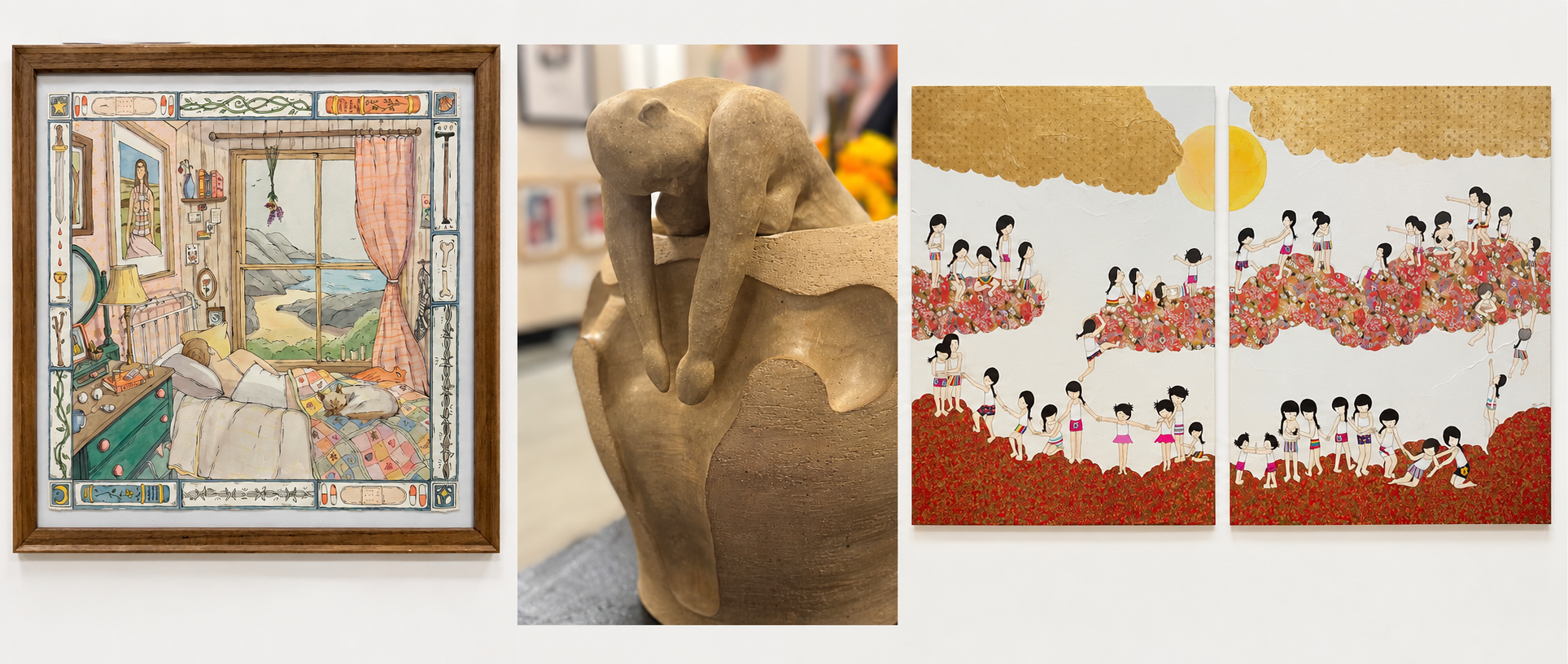
Endometriosis through artists’ eyes at FLARE: Illuminating Endometriosis.
From left: Windows by Poppy Fowler; La Dolores by Laura Solar; and The Light We Carry by Kyung Jeon, three works exploring the lived experience, pain, connection, and resilience surrounding endometriosis.
As physicians, we ask people to describe pain constantly.
Where does it hurt?
How badly?
How often?
What does it feel like?
What makes it better or worse?
Those questions matter. But after treating so many women with endometriosis, I also know how inadequate language can sometimes feel.
How do you describe years of pain that other people have told you is normal?
How do you explain losing parts of your adolescence, relationships, career, fertility plans or sense of yourself to an illness someone else cannot see?
How do you communicate the exhaustion of having to convince people that what you are experiencing is real?
Art can communicate something that a pain scale or medical chart cannot. FLARE was created around that idea, bringing art, lived experience, education and advocacy into the same conversation. The inaugural exhibition included work across painting, clay, thread, photography, print, collage, fashion, jewelry and other forms.
I found myself looking at these pieces not just as a physician, but as someone trying to better understand what my patients have been trying to tell me. That was incredibly powerful.
The Art of Endometriosis Care
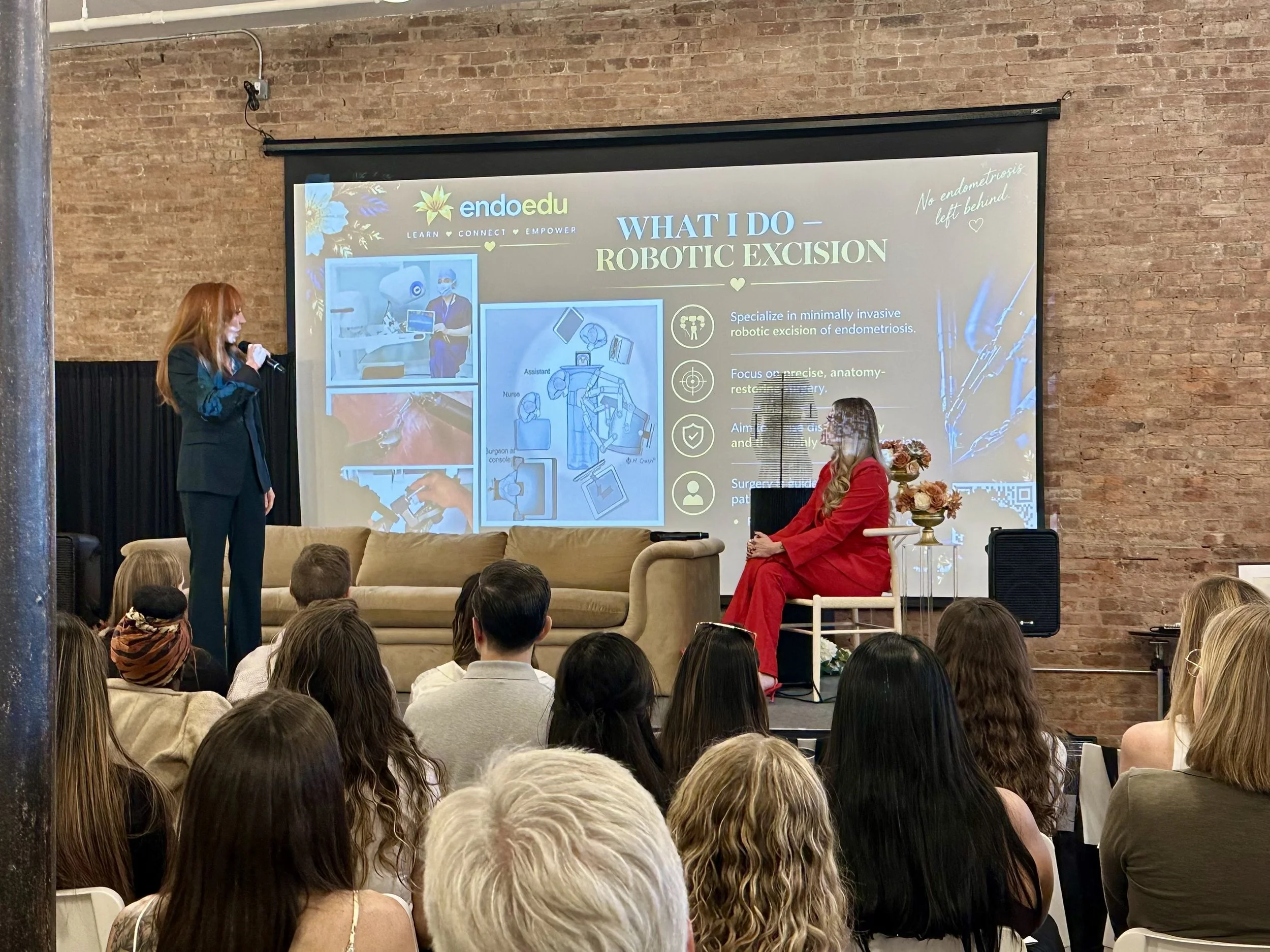
That afternoon, I had the privilege of taking the stage with Savannah Regensburger, MS, MBA, CNS for our joint keynote, “The Art of Endometriosis Care.”
Savannah brought a perspective that is difficult to replicate. She is a clinical nutritionist and researcher, but she is also an Endo Warrior herself. She opened the presentation by sharing her own experience with pain, delayed answers and ultimately finding care that changed the direction of her life. Transcript-Flare Keynote Raw Au…
I approached the conversation from the other side of that relationship: as an endometriosis excision surgeon.
But our message was ultimately the same.
Endometriosis care cannot begin and end in the operating room.
I love surgery. It is an enormous part of what I do. I believe the choice of surgeon matters, thoughtful excision matters, and the first surgery can have profound implications for what comes afterward. But surgery is still only one part of caring for a person with endometriosis.
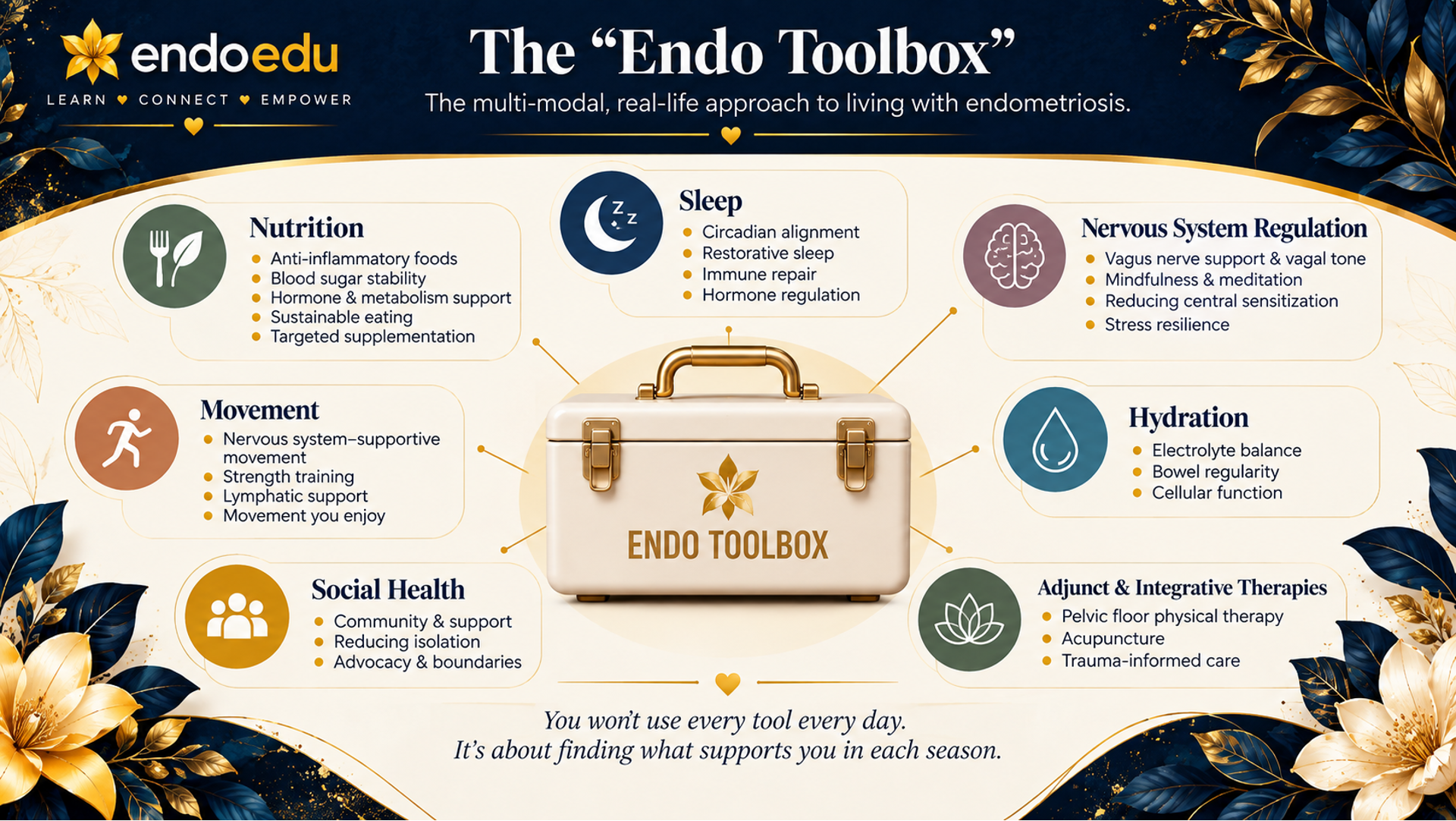
During the keynote, we talked about what happens before and after surgery and the broader "toolbox" that may be relevant for different people: pelvic floor physical therapy, nutrition, movement, sleep, acupuncture and integrative care, mental health, medical management, social connection and community.
Not every person needs every tool. And not every tool works the same way for every person. That became one of the most important themes of our conversation.
Your body isn't an algorithm
During the audience Q&A, I was asked how I balance all of these different options for patients.
My answer came back to something I have learned repeatedly in medicine:
People are different.
One person may respond well to hormonal management while another cannot tolerate it. One may find pelvic floor therapy transformative. Another may benefit from nutrition support, acupuncture, pain management or a combination of approaches.
The goal shouldn't be to force every person through the same algorithm. The goal is to understand the individual person's disease, symptoms, priorities and goals, and then determine which tools make sense for them. As I told the audience:
“It’s your body. Your autonomy.”
Ultimately, the goal is helping someone regain quality of life, not making their care conform to what everyone else's care is supposed to look like.
From observations to research questions
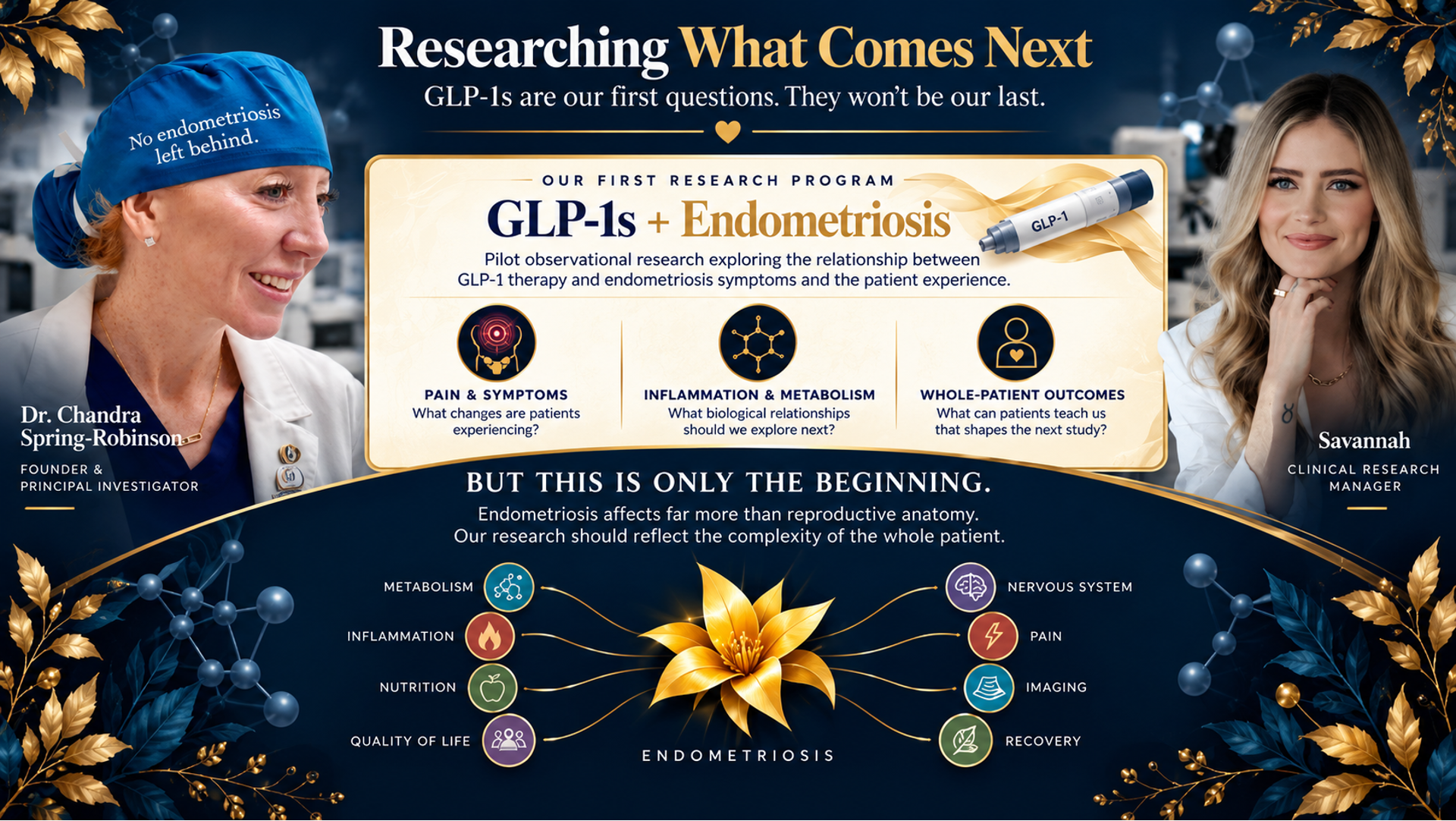
We also talked about where endometriosis care might go next. The day before FLARE, Savannah and I had been at Cold Spring Harbor Laboratory discussing inflammation, immunity, metabolism, organoids and the enormous biological variability we see among people with endometriosis.
One of the questions our team is particularly interested in investigating is the relationship among metabolism, inflammation, endometriosis symptoms and GLP-1-based medications. I was careful in the presentation to make an important distinction: these medications are not FDA-approved treatments for endometriosis, and the observations we have made in clinical practice are not proof that they treat the disease.
But observations can become questions. And questions can become research. That was exactly what we had been discussing at Cold Spring Harbor less than 36 hours earlier: the responsibility to take something interesting that we observe clinically and subject it to rigorous scientific investigation rather than prematurely turning it into an answer.
The questions continued after the slides ended
One of my favorite parts of the keynote was the Q&A. The audience wasn't interested in easy questions.
We talked about GLP-1 medications and their limitations. We discussed nutrition and movement. We talked about finding pelvic floor therapists and other professionals who actually understand endometriosis. We discussed the financial reality of trying to assemble multidisciplinary care. And we talked about surgery.
One audience member asked about the difference between robotic and conventional laparoscopic surgery. I explained why robotics has become my preferred platform for complex endometriosis surgery, particularly the magnified three-dimensional visualization and instrument control it provides me when working around complex anatomy. I also made an important point: there are excellent laparoscopic surgeons. Technology is a tool, and it doesn't replace surgical expertise.
These are exactly the conversations I want people with endometriosis to be able to have. Not simply, What treatment should I get?
But:
Why?
What are my options?
What are the limitations?
What evidence do we actually have?
And what makes sense for me?
Question everything
At the end of the keynote, Jeff asked Savannah and me one final question.
After everything people had experienced at FLARE, what did we want them to leave with?
Savannah talked about giving yourself grace. She described how even she can become numb to the experience of chronic illness, and how seeing the artwork at FLARE brought some of those emotions back to the surface. Her advice was to allow yourself to feel them.
My answer was different.
Question everything.
Question the medication you're taking.
Question what your physician tells you.
Question what your physical therapist tells you.
Question what your acupuncturist tells you.
And ask why.
Not because every recommendation is wrong. And not because patients and physicians should be adversaries. Ask because this is your body. You deserve to understand why someone is recommending something, what the alternatives are, what we know, what we don't know and how that decision fits your goals. The more you understand, the more you can participate meaningfully in your own care.
Three perspectives. One extraordinary weekend.
Looking back, I don't think we could have planned a better progression if we had tried. On Friday at Cold Spring Harbor Laboratory, I was surrounded by scientists asking questions about cells, inflammation, metabolism, immunity and disease biology. On Saturday morning in Central Park, there were no slides and no lecture. We sat with Endo Warriors and listened to the questions, experiences and frustrations that don't always make their way into an exam room. And Saturday afternoon at FLARE, artists showed us something else entirely. They showed us endometriosis through their eyes.
Science helps us investigate disease.
Medicine helps us care for it.
Community helps us understand how people live with it.
And art can help us see what someone may never be able to fully explain.
Perhaps the art of endometriosis care is recognizing that none of those perspectives is sufficient by itself.
As a surgeon, I will continue operating.
As a researcher, I will continue asking questions.
As an educator, I will continue sharing what we learn.
But weekends like this remind me that some of the most important things I can do are much simpler:
Keep asking.
Keep listening.
And never stop learning from the people actually living with this disease.